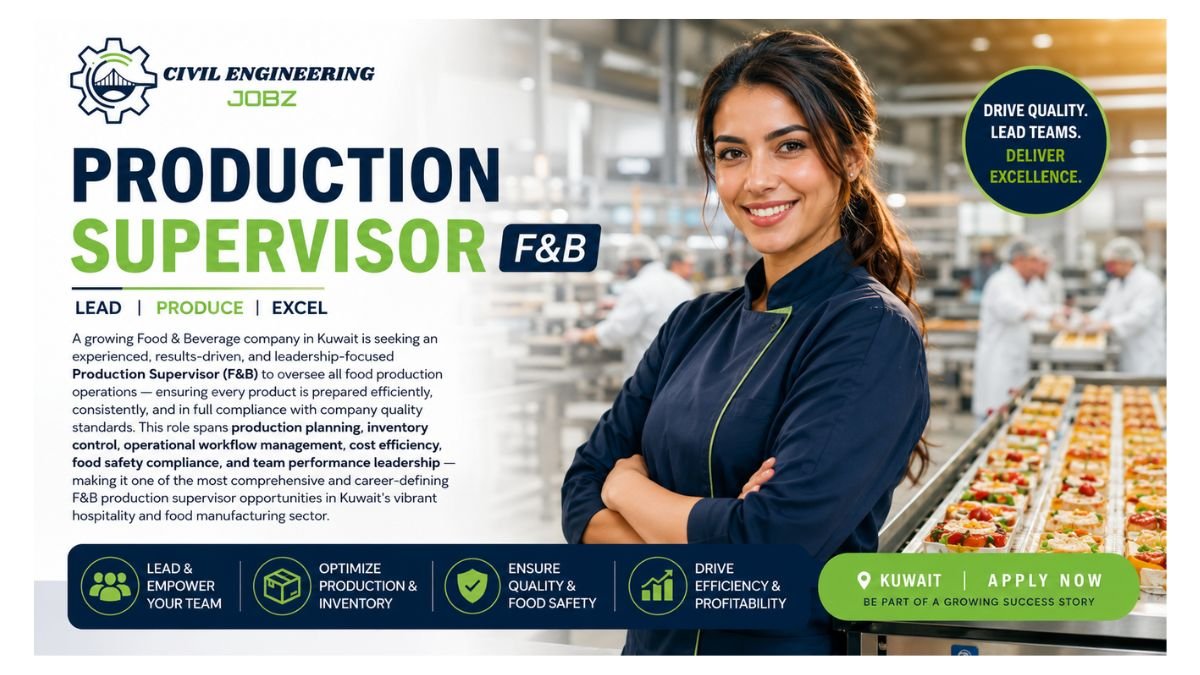
A career in food production is all about planning, discipline, efficiency, and teamwork.
Production interviews test how well you understand process flow, people management, hygiene, safety, and real-time decision making on the shop floor.
If you’re aiming for a role as a Production Officer, Supervisor, or Executive, these 25 smart interview questions with practical answers will help you stand out.
???? Food Production Interview Questions with Smart Answers
1. What is the main role of a Production Officer in a food plant?
A Production Officer ensures smooth operations by managing manpower, machines, materials, and methods while meeting quality, safety, and production targets.
2. How do you define production efficiency?
Production efficiency means achieving maximum output with minimum waste, downtime, and cost while maintaining product quality.
3. What factors affect line productivity?
Machine performance, operator skill, raw material quality, downtime, changeover time, and process control all impact productivity.
4. How do you calculate Overall Equipment Effectiveness (OEE)?
OEE is calculated using Availability × Performance × Quality to measure how effectively equipment is utilized.
5. What are the major losses in a production line?
Breakdowns, setup losses, minor stoppages, reduced speed, defects, and rework are common production losses.
6. How do you handle machine breakdown during production?
I inform maintenance immediately, shift production if possible, ensure product safety, and document downtime to avoid future recurrence.
7. Difference between batch and continuous processing?
Batch processing produces food in fixed quantities, while continuous processing runs non-stop for large-scale, uniform production.
8. How do you maintain hygiene in production areas?
By following GMPs, ensuring regular cleaning, enforcing personal hygiene rules, and monitoring sanitation schedules.
9. How do you manage manpower during a shift?
I assign clear responsibilities, rotate tasks if needed, monitor performance, and maintain discipline and motivation.
10. How do you plan daily production targets?
Targets are planned based on demand, machine capacity, manpower availability, and inventory levels.
????️ Operations & Coordination Questions
11. What documents are maintained in production?
Production logs, batch records, downtime reports, cleaning records, and yield reports are commonly maintained.
12. How do you coordinate with QA and Maintenance?
Through daily meetings, clear communication, shared records, and quick response during deviations or breakdowns.
13. What are CCPs in production?
CCPs are critical stages where control is essential to prevent food safety hazards, such as cooking temperature or metal detection.
14. How do you control wastage or rework?
By monitoring processes, training operators, controlling parameters, and analyzing root causes of losses.
15. What safety protocols should be followed in a plant?
Use of PPE, machine guarding, lockout-tagout, emergency procedures, and safety training are essential.
16. How do you manage raw material shortages during a shift?
I coordinate with stores, adjust the production plan, and inform planning to avoid delays or quality risks.
17. Why is line clearance important before start-up?
It prevents mix-ups, contamination, and ensures the line is clean, safe, and ready for the correct product.
???? Quality, Systems & Decision-Making
18. How do you ensure product traceability?
By maintaining batch records, raw material codes, production dates, and proper documentation.
19. What do you do if product specifications fail during production?
I stop the line if required, inform QA, isolate affected product, and correct the process before restarting.
20. Why is GMP important in production?
GMP ensures food safety, consistent quality, legal compliance, and consumer trust.
21. How can automation improve production efficiency?
Automation reduces human error, increases speed, improves consistency, and lowers operational costs.
22. How do you train new operators?
Through SOPs, hands-on training, safety briefings, and close supervision during initial shifts.
23. Difference between preventive and breakdown maintenance?
Preventive maintenance avoids failures through scheduled checks, while breakdown maintenance happens after failure.
24. How do you ensure timely dispatch with quality consistency?
By proper planning, coordination with QA and logistics, and real-time production monitoring.
25. Why do you want to join production instead of QA or R&D?
Production offers hands-on experience, real-time problem-solving, leadership opportunities, and direct operational impact.
You click on “Next Page” and read page number 10…